
A sharp rise can be attributed to the significant changes in India's share buyback tax regime, which will come into effect from October 1, 2024.

Had you invested Rs 10,000 each in JSW Steel, Titan Company and Bajaj Finance 20 years ago, when they were just penny stocks (trading below Rs 10), you would have become a millionaire by now.
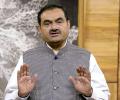
Adani group is on track to surpass a combined Ebitda (earnings before interest, taxes, depreciation, and amortisation) of Rs 1 trillion in the ongoing financial year (FY25) as it prepares for a $2 billion (over Rs 16,700 crore) share sale by its flagship entity Adani Enterprises next month, according to a source close to the matter.

Reliance Group chairman Anil Ambani is reviewing "appropriate" options after the Securities and Exchange Board of India (Sebi) banned him from the stock markets and imposed a Rs 25-crore fine for alleged fund diversion from Reliance Home Finance (RHFL), a former subsidiary of Reliance Capital. In a statement, a spokesperson for Ambani said he had resigned from the boards of Reliance Infrastructure and Reliance Power pursuant to the Sebi interim order dated February 11, 2022.

'Volumes in F&O trading had gone up rapidly and, in a way, the increase in STT on F&O will protect investor interest.'

While praising the internship scheme announced in the Budget, India Inc wants clarity on how it will be implemented. The scheme is expected to help companies address the skill gap in employment. Dheeraj Hinduja, chairman, auto major Ashok Leyland, said: "We had started an internship programme at our plant in Pantnagar, which we established in 2010 with colleges there.

Gold seems to be losing its glitter in India due to a rise in prices. Demand in Q2CY24 was 149.7 tonnes - a 5 per cent drop compared to 158.1 tonnes in the same period last year, according to a report by the World Gold Council (WGC). Demand by value in April-June 2024 stood at Rs 93,850 crore, up by 14 per cent compared to Rs 82,530 crore in the same period last year.

Chief executive officers (CEOs) across sectors have expressed intentions to expand capacities, expecting the government's target to invest a record Rs 11.11 trillion on infrastructure development will act as a catalyst for a jump in consumer demand. "With the government planning a capex of Rs 11.11 trillion, private sector investment will come in a big way. Companies will be preparing for it right from today," H M Bangur, chairman of Shree Cement, told Business Standard. For the past few years, the investment scene in India has been dominated by government capital expenditures; private investments in the manufacturing sector have remained muted.

Mauritius-based Hinduja group firm IndusInd International Holdings (IIHL) has informed the administrator of Reliance Capital that it is ready with its equity contribution of Rs 2,750 crore in cash to acquire the bankrupt firm, but it wants certain conditions to be met in accordance with the resolution plan before transferring the amount. IIHL has also filed an application with the Mumbai Bench of the National Company Law Tribunal (NCLT), seeking directions for the administrator and the committee of creditors (CoC) to complete all pending activities to close the transaction and not let the lenders invoke the bank guarantees provided by the firm earlier.

Anil Agarwal, chairman of metals major Vedanta group, has called for the sale of government stake in Bharat Gold Mine and Hutti Gold Mine so as to increase production of the yellow metal in the country. In a social media post, Agarwal said global gold prices are currently at record highs and India imports 99.9 per cent of its requirement. "With massive investments, we can be a major producer of gold and a big generator of employment," Agarwal said.

Despite the rally in equities over the last few years, India, according to Christopher Wood, global head of equity strategy at Jefferies, is still in early stages of an equity cult. Any changes to the capital gains tax for equities - both long-term and short-term - in Budget 2024 scheduled to be announced on July 23, he believes, can trigger a bigger correction that what the markets witnessed post the Lok Sabha election outcome on June 4 that saw the Bharatiya Janata Party (BJP) lose majority, though it was able to form the government with the help of coalition partners.

An average Indian couple spends around 2x on weddings versus education (pre-primary to graduation).

'We expect market consolidation and recommend buying during market dips.'

'Though one cannot paint the entire microcap basket with the same brush, investors need to be careful now as to what they're buying.'

'We are confident that over the next few years the government will strike a fine balance between populist measures and growth, and manage coalition partners well.'

Singapore government's sovereign wealth fund Temasek is looking to invest $10 billion in India during the next three years, Ravi Lambah, Temasek's head of India and strategic initiatives, said.

Bain Capital-backed Tyger Capital is planning to list its shares on the Indian stock exchanges by the next financial year and is targeting to grow its assets under management by four times to Rs 20,000 crore in five years from Rs 5,000 crore now, Gaurav Gupta, MD and CEO of the firm said. In an exclusive interview, Gupta said that keeping with the growing business, the finance company expects to on-board 600 people in the current financial year as it is opening 60-65 new branches for broad-basing its network in the country.

'Expectations are high regarding the change in LTCG with respect to equity investments.'

Life Insurance Corporation of India (LIC) has made the most of the stock market boom by reducing stakes in all its top conglomerates during the financial year 2023-2024 (FY24). However, even after reducing exposure, the value of its remaining stake has gone up substantially across all groups, according to data collated from stock exchange filings.

The bias for the BSE benchmark index, technical charts suggest, is likely to remain bullish as long as the index holds above 75,600 levels for the rest of the year.
 © 2026 Rediff.com - Investor Information - Advertise with us - Disclaimer - Privacy Policy - Sitemap - Feedback - About us - Terms of use - Grievances